
In-depth analysis and insights on AI chatbots and conversational AI

In-depth analysis on AI chatbots

Even as AI evolves rapidly, we focus on what actually works in real-world chatbot products.

What we focus on

Clear insights on AI chatbots that matter

Useful chatbots

We analyze why most chatbots fail after deployment, and what differentiates useful conversational products from simple demos.

UX conversationnelle

Comment l’expérience utilisateur influence l’adoption réelle des chatbots, bien au-delà des performances du modèle.

Scaling chatbots

What changes when a chatbot moves from a prototype to real-world usage at scale.

Tools and integrations

How chatbots connect to existing tools, workflows, and systems in real production environments.

Chatbots in support

How chatbots are actually used in customer support teams, and where their real limits appear.

Super security

Why privacy, data handling, and security constraints shape real-world chatbot deployments.

What makes chatbots
truly engaging

Engagement is not about animations or personality tricks. It’s about clarity, relevance, and how well a chatbot fits into real user workflows.

We look at how chatbot performance, reliability, and user trust are measured after deployment, and how these factors influence long-term adoption in real-world settings.

What we focus on

Our features help
improve chatbot adoption

We analyze how design choices, data quality, and real-world constraints shape the effectiveness of AI chatbots, from first interaction to long-term usage.

Chatbot architecture

How underlying architecture choices impact chatbot reliability, scalability, and long-term maintenance.

Conversational UX

Why conversation flow, tone, and interface design matter more than features in chatbot adoption.

Support and trust

How reliability, transparency, and ongoing support shape user trust in AI-powered chatbots.
Our awesome features

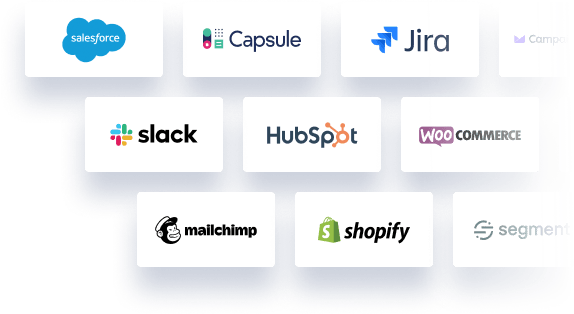
Chatbots connect to tools
teams already use

Integrations play a critical role in whether chatbots are actually useful.
We analyze how connections with existing tools, data sources, and platforms shape accuracy, reliability, and real-world adoption.

Frequently asked questions

We have some FAQ to
inform you more

The choice between SaaS and on-premise chatbot deployments depends less on technology and more on context. SaaS solutions offer speed, lower upfront costs, and easier maintenance, making them ideal for teams that want to move fast. On-premise deployments provide greater control over data, security, and customization, but require more internal resources and long-term commitment. There is no universal answer — the right choice depends on regulatory constraints, data sensitivity, team expertise, and how critical the chatbot is to core operations.
The main difference between SaaS and on-premise solutions becomes clearer over time. SaaS platforms simplify updates, scaling, and infrastructure management, but create a dependency on a third-party provider and pricing model. On-premise systems reduce vendor dependency and offer deeper control, but shift responsibility for maintenance, security updates, and scalability to internal teams. Over the long term, the decision is often driven by total cost of ownership, internal technical capacity, and tolerance for operational complexity.
Security and data constraints are often the decisive factors when choosing between SaaS and on-premise chatbots. SaaS solutions typically provide strong baseline security and compliance certifications, but require trusting an external provider with sensitive data. On-premise deployments allow organizations to keep full control over data storage, access policies, and compliance processes, which is critical in regulated industries. When data privacy, sovereignty, or strict compliance requirements are involved, architectural choices often matter more than features.
Scalability is one of the strongest advantages of SaaS chatbot platforms. They are designed to handle traffic spikes, usage growth, and infrastructure scaling with minimal effort from internal teams. On-premise chatbots can also scale, but doing so requires careful capacity planning, additional infrastructure, and ongoing performance monitoring. For projects with unpredictable usage patterns or rapid growth, SaaS solutions often reduce risk. For stable, predictable workloads, on-premise deployments can offer consistent performance with tighter control.
Speed of deployment is where SaaS chatbot solutions clearly stand out. They allow teams to prototype, test, and iterate quickly, often without heavy technical setup. This flexibility makes SaaS a strong choice for experimentation, early-stage products, or teams still refining their use cases. On-premise chatbots typically require longer setup cycles, but offer deeper customization and tighter integration with internal systems over time. The trade-off is usually between short-term agility and long-term architectural freedom.
There is no universally “best” option between SaaS and on-premise chatbots. Each approach reflects different priorities, constraints, and stages of maturity. What matters most is aligning architectural decisions with real operational needs, not with trends or assumptions. In practice, many organizations evolve over time — starting with SaaS for speed and learning, then moving to hybrid or on-premise solutions as requirements around data, scale, and control become clearer.
Cost comparisons between SaaS and on-premise chatbots are often misleading when only licensing fees are considered. SaaS solutions typically involve predictable subscription costs, which include hosting, maintenance, updates, and support. On-premise deployments may appear cheaper upfront, but introduce hidden costs related to infrastructure, engineering time, security updates, and long-term maintenance. Evaluating ROI requires looking beyond initial pricing and considering total cost of ownership, internal resource allocation, and the business impact of faster deployment or greater control.
Hybrid approaches are increasingly common for chatbot deployments. Many organizations start with SaaS solutions for speed and experimentation, while keeping sensitive data or critical components on-premise. This hybrid model allows teams to balance flexibility, control, and scalability without committing fully to a single architecture. Over time, hybrid setups can evolve as requirements change, making them a practical way to future-proof chatbot strategies in uncertain or rapidly changing environments.
How it works?

How to use AIChatBotInsights

Read Free access
  • In-depth articles
  • Independent analysis
  • Long-form insights
  • Open access
  • • No sign-up required
Learn Regular updates
  • Practical frameworks
  • Real-world use cases
  • Deployment insights
  • Long-term perspectives
  • • Continuously updated
No vendor lock-in Free access
  • In-depth articles
  • Independent analysis
  • Long-form insights
  • Open access
  • No sign-up required
0
    0
    Your Cart
    Your cart is emptyReturn to Shop